
Dili, From ensuring safe drinking water and food to detecting disease outbreaks early and preparing for health emergencies, a country's ability to protect its people depends on essential public health functions that often operate behind the scenes.
Timor-Leste has begun a two-year initiative to strengthen these critical functions, starting with a National Benchmarking Workshop on Essential Public Health Functions (EPHFs) held in Dili on 12 October.
The initiative is led by the Ministry of Health, with financial support from the Government of the People's Republic of China through the China International Development Cooperation Agency (CIDCA) and technical support from the World Health Organization (WHO).

It is part of a four-country initiative covering Maldives, Papua New Guinea, Thailand and Timor-Leste, supported under the Chinese government's Global Development and South-South Cooperation Fund.
National Benchmarking Workshop
The workshop brought together representatives from the Ministry of Health, other government ministries and partners to assess the country's existing public health capacities, identify gaps and determine priorities for strengthening the system.
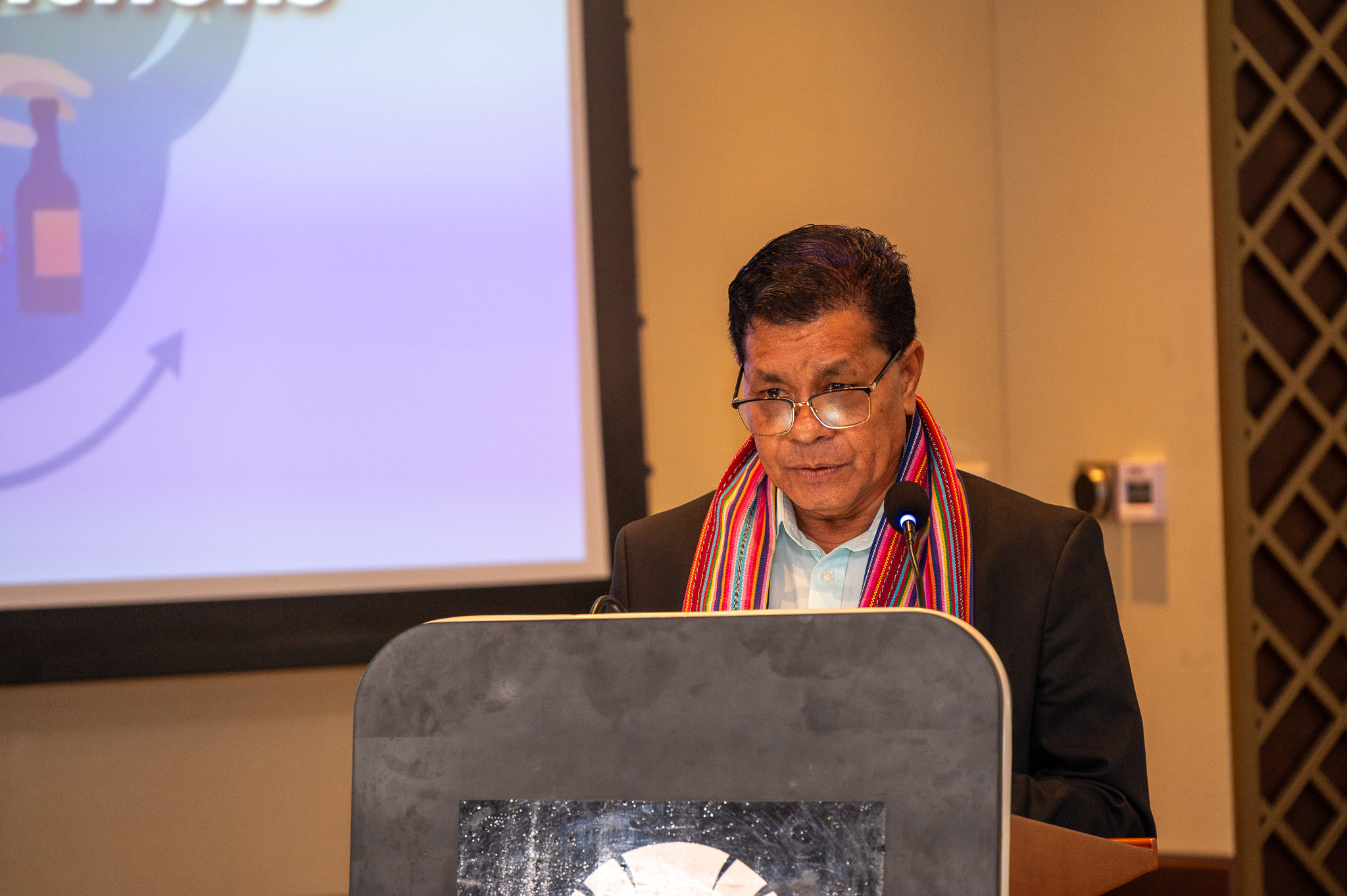
Mr José dos Reis Magno, Vice Minister of Health for Institutional Strengthening said Timor-Leste would initially focus on five priority service-delivery functions.
While WHO identifies 12 Essential Public Health Functions (EPHF), Mr José dos Reis Magno, Vice Minister of Health for Institutional Strengthening, said Timor-Leste would initially focus on five priority service-delivery functions as part of the benchmarking exercise:
- Public Health Emergency Management
- Public Health Surveillance and Monitoring
- Disease Prevention and Early Detection
- Health Protection
- Health Promotion
Emphasizing that benchmarking must lead to tangible improvements, the Vice Minister said, “The findings should guide investment, training, surveillance and laboratory strengthening, emergency preparedness and stronger multisectoral coordination”. He stressed that these capacities must be strengthened at national, municipal, health facility and community levels, ensuring that preparedness extends beyond Dili and national institutions.
 Mr Xu Xingqiang, Chargé d'Affaires ad interim of the Chinese Embassy in Timor-Leste delivers remarks at the national workshop.
Mr Xu Xingqiang, Chargé d'Affaires ad interim of the Chinese Embassy in Timor-Leste, also highlighted the importance of investing in the public health workforce.
“We recognize that a strong public health workforce is the cornerstone of a resilient health system, and that strengthening the workforce responsible for essential public health functions is at the heart of this project,” he said.
He also emphasized the importance of ensuring that financial support translates into practical results. “Every dollar must be put to the best possible use, and every effort must be directed where it can make the greatest difference,” he said, encouraging participants to translate the workshop's findings into improvements in technical capacity and workforce competencies.
Why essential public health functions matter
Most people encounter the health system when they visit a doctor, nurse or midwife. Yet much of the work that keeps people healthy takes place outside hospitals and clinics.
EPHFs are the systems and services that prevent disease, monitor health threats, protect communities and promote healthier lives. Their effectiveness, for instance, can determine how quickly an outbreak is detected and contained.
WHO Representative to Timor-Leste Dr Arvind Mathur explained that while clinical care focuses on individuals, public health works at the population level. It ensures safe drinking water, food safety and protection from harmful air pollution, drawing on professionals across multiple sectors.

Dr Arvind Mathur, WHO Representative address participants during the workshop in Dili.
“This is the work of public health, and it is critical to keeping our communities healthy,” Dr Mathur said. He added that all three levels of WHO—Headquarters, the Regional Office for South-East Asia and the WHO Country Office in Timor-Leste—are supporting the initiative.
For Timor-Leste, strengthening these functions is particularly important given recurring disease outbreaks, emerging infections, climate-related health risks, natural disasters, food and environmental risks and a growing burden of noncommunicable diseases (NCDs).
Taking stock of existing capacities
Through presentations and discussions, participants examined progress and challenges across the five priority functions, including service delivery, institutional coordination and emergency preparedness.
 Participants engage in interactive discussions to identify gaps and priorities for strengthening essential public health functions across Timor-Leste.
Dr Elisabeth Leto Mau, Director-General of Primary Health Care, highlighted achievements in immunization, disease control, NCD screening and community health.
Mr Simplício Amaral, Executive Director of SNAEM, outlined advances in emergency preparedness, including the establishment of the national Public Health Emergency Operations Centre and the Command-and-Control Centre at HNGV Hospital, alongside expanded emergency coordination in four municipalities.
Mr Narciso Fernandes, Director-General of Corporate Services, emphasized the importance of a One Health approach to address threats involving human, animal and environmental health.
Assessment to action in 2027
The October workshop marks the first step in implementing this two-year initiative.
A second national workshop, scheduled for December 2026, will identify the workforce delivering essential public health functions, assess its size and distribution, and identify shortages. These findings will inform recommendations, an action plan and influence the development of the next iteration of the 5-year National Health Workforce Strategy.

In 2027, the initiative will move from assessment to policy development. The Ministry of Health, WHO and partners will use findings from both workshops to engage in policy dialogue and develop strategies and concrete measures to strengthen the public health workforce.