Screening and brief intervention for alcohol problems in primary health care
BACKGROUND
There are many forms of excessive drinking that cause substantial risk or harm to the individual. They include high level drinking each day, repeated episodes of drinking to intoxication, drinking that is actually causing physical or mental harm, and drinking that has resulted in the person becoming dependent on alcohol. Excessive drinking causes illness and distress to the drinker and his or her family and friends. It is a major cause of breakdown in relationships, trauma, hospitalization, prolonged disability and early death. Alcohol-related problems represent an immense economic loss to many communities around the world.
Screening for alcohol use: why AUDIT?
The AUDIT was developed as a simple method of screening for excessive drinking and to assist in brief assessment. It can help identify excessive drinking as the cause of the presenting illness. It provides a framework for intervention to help risky drinkers reduce or cease alcohol consumption and thereby avoid the harmful consequences of their drinking. The AUDIT also helps to identify alcohol dependence and some specific consequences of harmful drinking. Of utmost importance for screening is the fact that people who are not dependent on alcohol may stop or reduce their alcohol consumption with appropriate assistance and effort. The manual is particularly designed for health care practitioners and a range of health settings, but with suitable instructions it can be self-administered or used by non-health professionals.
Screening for alcohol consumption among patients in primary care carries many potential benefits. It provides an opportunity to educate patients about low-risk consumption levels and the risks of excessive alcohol use. Information about the amount and frequency of alcohol consumption may inform the diagnosis of the patient's presenting condition, and it may alert clinicians to the need to advise patients whose alcohol consumption might adversely affect their use of medications and other aspects of their treatment. Screening also offers the opportunity for practitioners to take preventative measures that have proven effective in reducing alcohol-related risks.
Development and validation of the AUDIT
The AUDIT was developed and evaluated over a period of two decades, and it has been found to provide an accurate measure of risk across gender, age and cultures. As the first screening test designed specifically for use in primary care settings, the AUDIT has the following advantages:
- Cross-national standardization: the AUDIT was validated on primary health care patients in six countries. It is the only screening test specifically designed for international use;
- Identifies hazardous and harmful alcohol use, as well as possible dependence;
- Brief, rapid and flexible;
- Designed for primary health care workers;
- Consistent with ICD-10 definitions of alcohol dependence and harmful alcohol use;
- Focuses on recent alcohol use.
BRIEF INTERVENTION
Brief interventions are those practices that aim to identify a real or potential alcohol problem and motivate an individual to do something about it. Brief interventions have become increasingly valuable in the management of individuals with alcohol-related problems. During the past 20 years, there have been numerous randomized trials of brief interventions in a variety of health care settings. Studies have been conducted in Australia, Bulgaria, Mexico, the United Kingdom, Norway, Sweden, the United States and many other countries. Results from these studies show that there is clear evidence that well-designed brief intervention strategies are effective, low-cost and easy to administer.
Because research has shown that brief interventions are low in cost and have proven to be effective across the spectrum of alcohol problems, health workers and policy-makers have increasingly focused on them as tools to fill the gap between the primary prevention efforts and more intensive treatment for persons with serious alcohol use disorders. It is worth noting that brief interventions are not designed to treat persons with alcohol dependence, which generally requires greater expertise and more intensive clinical management. However, they might serve well as as initial treatment for severely dependent patients seeking extended treatment.
Alongside with the companion publication on the AUDIT, WHO has also produced a manual to aid primary health care workers in administering brief interventions to persons whose alcohol consumption has become hazardous or harmful to their health. Together, these manuals describe a comprehensive approach to alcohol screening and brief intervention (SBI) that is designed to improve the health of the population and patient groups as well as individuals.
Related activities:
The ASSIST project - Alcohol, Smoking and Substance Involvement Screening Test
Publications
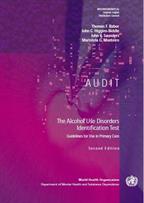
AUDIT : the Alcohol Use Disorders Identification Test : guidelines for use in primary health care
This manual introduces the AUDIT, the Alcohol Use Disorders Identification Test, and describes how to use it to identify persons with hazardous and harmful...
Meeting of the South-East Asia Regional Working Group on Immunization, New Delhi, India, 26 September...
The Regional Working Group (RWG) meeting was convened to translate recommendations of the Seventeenth Meeting of the WHO South-East Asia Regional Immunization...
A comprehensive integrated review of malaria, leishmaniasis, filariasis and dengue control programmes...
Providing free health care, the health system of Sri Lanka has achieved significant successes; this has led to high immunization coverage and impressive...
Cupping therapy: descriptive synthesis of training
Cupping therapy: descriptive synthesis of training presents an evidence-informed overview of how cupping therapy training is reported and organized across...

Priority indicators to monitor the impact of heat exposure on maternal, newborn and child health
As the frequency, duration and intensity of extreme heat events increase, pregnant and postpartum women, newborns and children face growing risks to their...
Development, management and support of care workers
Strong primary health care-oriented systems depend on an integrated health and care workforce capable of delivering continuous, people-centred services...
Regional Workshop on Strengthening Paediatric Medicines Ecosystems in the ASEAN Region, Report of a WHO...
The Regional Workshop on Strengthening Paediatric Medicines Ecosystems in the ASEAN Region was convened in Kuala Lumpur, Malaysia, from 11–13 May...
Strategic and technical advisory group of experts on well-being and health promotion: meeting report,...
This report summarizes the first meeting of the WHO Strategic and Technical Advisory Group of Experts on Well-being and Health Promotion, held on 16 April...
This report provides the first comprehensive global assessment of within-country inequalities in noncommunicable diseases (NCDs) and their risk factors....
This advocacy brief summarizes the findings of the World Health Organization report State of inequality: noncommunicable diseases and their risk factors,...
Guidance on evidence generation on new tuberculosis diagnostics
The Guidance on evidence generation (GEG) for new tuberculosis diagnostics advises researchers, developers, funders and other stakeholders on how evidence...
A comprehensive external Rabies Control Programme review in Sri Lanka. Report of a WHO mission, 8–15...
Sri Lanka is making significant strides towards eliminating rabies, guided by a clear national vision and strong government leadership. The country has...
Ten years of the Paris Agreement: a global review of health in nationally determined contributions
This WHO report reviews the integration of health into the third generation of nationally determined contributions (NDCs 3.0), the national climate plans...
WHO Academy: annual report 2025
The WHO Academy annual report 2025 documents a year of significant growth and transformation in lifelong learning for health, highlighting expanded access...
Accelerating implementation of the WHO global alcohol action plan 2022-2030 in the Western Pacific Region
At the seventy-sixth session of the WHO Regional Committee for the Western Pacific in 2025, Member States endorsed Accelerating implementation of the Global...
Health statistics in the Western Pacific Region 2026: monitoring health for the SDGs
Health statistics in the Western Pacific Region 2026: monitoring health for the SDGs provides an overview of the state of health in the Region, including...
WHO pandemic influenza vaccine response: operational plan
Influenza pandemics can have significant consequences for human health and economic well-being worldwide. Vaccines are a critical component of pandemic...
WHO pharmaceuticals newsletter: 2026, No. 2
The WHO Pharmaceuticals Newsletter provides the latest information on the safety of medicinal products and regulatory actions taken by authorities around...
The WHO Academy serves as a transformative force in global health education, dedicated to empowering health professionals, policymakers, and public health...
Philippines–WHO country cooperation strategy 2025–2028
The Philippines–WHO Country Cooperation Strategy 2025–2028 defines the strategic priorities guiding collaboration between the World Health...
Funding a tuberculosis-free future: an investment case for screening and preventive treatment, second...
This document presents the findings of a modelling study that examined in detail the costs and benefits of tuberculosis (TB) screening plus TB preventive...
Related resources
This manual is a companion to ‘The Alcohol, Smoking and Substance Involvement Screening Test (ASSIST): manual for use in primary care’. The...
The Alcohol, Smoking and Substance Involvement Screening Test (ASSIST) was developed for the World Health Organization (WHO) by an international group...
Substance use problems can arise as a result of acute intoxication, regular use or dependence - and from the way in which substances are used. This guide...
Guidelines for identification and management of substance use and substance use disorders in pregnancy
These guidelines contain recommendations on the identification and management of substance use and substance use disorders for health care services which...
mhGAP Intervention Guide - Version 2.0
This is the second version (2016) of the mhGAP Intervention Guide (mhGAP-IG) for mental, neurological and substance use (MNS) disorders in non-specialist...
mhGAP Training Manuals - for the mhGAP Intervention Guide for mental, neurological and substance use...
As part of the Mental Health Gap Action Programme, WHO has developed training manuals (Training of trainers and supervisors training manual and Training...
Involvement of nurses and midwives in screening and brief interventions for hazardous and harmful use...
Psychoactive substance use can result in a wide range of health and social problems for individuals, their families and the wider community. Globally,...