Primary level health facilities
Every year, millions of sick children are seen at first-level health facilities. Due to limited human capacity in low- and middle-income countries, and to minimal or non-existent diagnostic supports such as radiology and laboratory services, many children may be inadequately assessed and treated. IMCI was developed to allow high-quality treatment with limited resources.
The IMCI case management process follows these steps:
- Assess the child’s illness.
- Classify the illness based on signs.
- Identify treatment.
- Treat the child.
- Counsel the caretaker.
- Provide follow-up care.
Related publications
Every year, about 2.5 million children die in the first month of life, with 98% of these deaths occurring in developing countries. In 2017, 47% of all...
Dengue, dengue haemorrhagic fever and dengue shock syndrome in the context of the Integrated Management...
Dengue is not included in the generic Integrated Management of Childhood Illness (IMCI) algorithm but it is an important differential diagnosis of fever...
Epidemiology and Management of Common Skin Diseases in Children in Developing Countries
Despite the high frequency of skin diseases in developing countries, they have so far not been regarded as a significant health problem in the development...
Cough and cold remedies for the treatment of acute respiratory infections in young children
Respiratory tract infections are among the most important human health problems because of their high incidence and consequent economic costs. The number...

This chart booklet belongs to a set of distance learning course on integrated management of childhood illness.
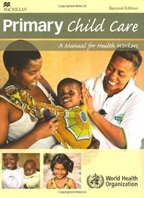
Primary Child Care: A manual for health workers
Primary Child Care: A manual for health workers has been written for health workers who provide primary care of infants and children, either during...
Training material