
 A young child plays outdoors in Addis Ababa. The ground in this area could be contaminated with lead – it is impossible to know just by looking. Young children are especially vulnerable to the effects of lead exposure because their brains and nervous systems are still developing. Photo credit: WHO/Aemero
A child sits on the ground, scooping dust into her hands and letting it fall between her fingers. It is an ordinary moment of play and a reminder of why preventing lead exposure can be so difficult. Lead can contaminate dust, soil, air, water, consumer products and workplaces without anyone knowing.
Ethiopia is working to change that. By strengthening prevention, clinical guidance, blood lead and environmental testing, diagnosis and patient care, the country is building a more connected response to a health threat that is often invisible.
The stakes are high, especially for children. Lead cannot be seen, smelled or tasted, yet once it enters the body it can damage multiple organ systems. Children absorb lead more readily than adults. For pregnant women, exposure can harm their baby’s developing brain even before birth, and young children are particularly vulnerable because their brains and nervous systems are still developing. Exposure can affect learning, attention and behaviour; at high levels, lead poisoning can cause even more severe harm. The challenge is that there is no single source to look for.
Lead may be encountered through improper recycling of used lead-acid batteries, contaminated dust and soil, unregulated cookware and other consumer products, some paints and cosmetics. Workers can also carry contaminated dust home on clothes, shoes, skin or tools. Lead has long been used in products such as batteries, paints, and plumbing materials because it can be inexpensive and resistant to corrosion. The widespread occurrence of lead in the environment is largely the result of human activity, including mining, smelting, refining and recycling, and from its use in a variety of consumer products and manufacturing and industrial processes.
Following the path of exposure
 A worker handles a used lead-acid battery in Addis Ababa. When batteries are opened, dismantled or recycled without adequate safeguards, lead can contaminate workers, surrounding workspaces and the environment. Photo credit: WHO/Aemero
In one small workshop in Addis Ababa, used vehicle batteries are opened by hand. Battery casings and components sit beside tools and equipment as valuable materials are recovered for reuse. Used lead-acid battery recycling can recover valuable materials, but where adequate protections and controls are lacking, dismantling and processing lead-containing components can expose workers and contaminate surrounding areas and potentially their families.
 A worker heats recovered material during informal battery recycling. Photo credit: WHO/Aemero.
The risk does not end when a battery is dismantled. Heating or smelting lead-containing material can release fumes and leave contaminated ash or dust behind. That is why prevention reaches well beyond the individual worker; safer collection and recycling systems, occupational protections, responsible waste management, environmental controls and effective standards all help reduce exposure.
The same story can continue inside the home. Lead-containing recycled metals can sometimes be found in local cookware, creating a potential source of exposure if lead leaches into food. For families, that means the source of exposure may be an everyday object that looks completely ordinary. Stronger product standards, testing and safer manufacturing can help make the healthy choice the easy choice.
 Food is prepared in a metal cooking pot. Photo credit: WHO/Aemero. |  A woman prepares food in her home. Photo credit: WHO/Aemero. |
Turning an invisible risk into a diagnosis
Because lead exposure is often silent, the health system is one of the most important places to make the invisible visible. A child or adult may have no obvious symptoms, or they may arrive with problems that could have many different causes. Without clinical awareness and access to testing, exposure can be easy to miss.
 Health workers at St Peter Specialized Hospital in Addis Ababa. Ethiopia is working to strengthen clinical guidance so health professionals are better equipped to recognize possible lead exposure, investigate it and provide appropriate patient care. Photo credit: WHO/Aemero.
 A health worker at St Peter Specialized Hospital in Addis Ababa, where strengthened clinical guidance will help frontline staff recognize possible lead exposure and connect patients to testing and care. Photo credit: WHO/Aemero.
Ethiopia is strengthening this front line. The national clinical guidance under development will help health workers know what questions to ask, when testing is appropriate, and how to manage patients according to their blood lead level and clinical condition.
Just as importantly, a diagnosis can open the door to prevention: Where might the exposure have happened? Is the source still present? Could anyone else in the household or community be at risk?
That is the crucial shift: from caring for one patient to preventing the next exposure. Clinical care can help the person in front of the health worker; a linked public-health response can trace the risk back to its source and help stop it from affecting someone else. And reducing exposure at the source will also be an essential part of managing the patient.
Expanding laboratory capacity
 Laboratory work at the Ethiopian Public Health Institute (EPHI) in Addis Ababa. Expanded laboratory capacity can help confirm lead exposure and connect patients to clinical care and public health action. Photo credit: WHO/Aemero.
At the Ethiopian Public Health Institute (EPHI), the invisible becomes measurable. Scientists use specialized equipment and carefully controlled procedures to measure toxic metals in biological samples. Expanding this laboratory capacity is a key part of Ethiopia’s effort to detect lead exposure more reliably and connect results to action.
A blood lead test can confirm that exposure has occurred, but the number alone is not the end of the story. Results need to be interpreted clinically, linked to follow-up care and, where possible, used to investigate the likely source. Strengthening the whole chain, from sample collection and transport to reliable analysis, diagnosis, patient care and prevention, can turn an isolated test into a functioning system.
WHO is working with Ethiopia and partners to strengthen that system. The collaboration includes support for clinical guidance, expanded laboratory testing and diagnosis, training materials for health-care workers and improved patient-care pathways and greater capacity to identify and respond to sources of exposure. The aim is lasting national capacity: health workers are trained and know what to look for, laboratories able to produce reliable results, clearer referral pathways and better evidence to guide prevention.
From individual cases to national prevention
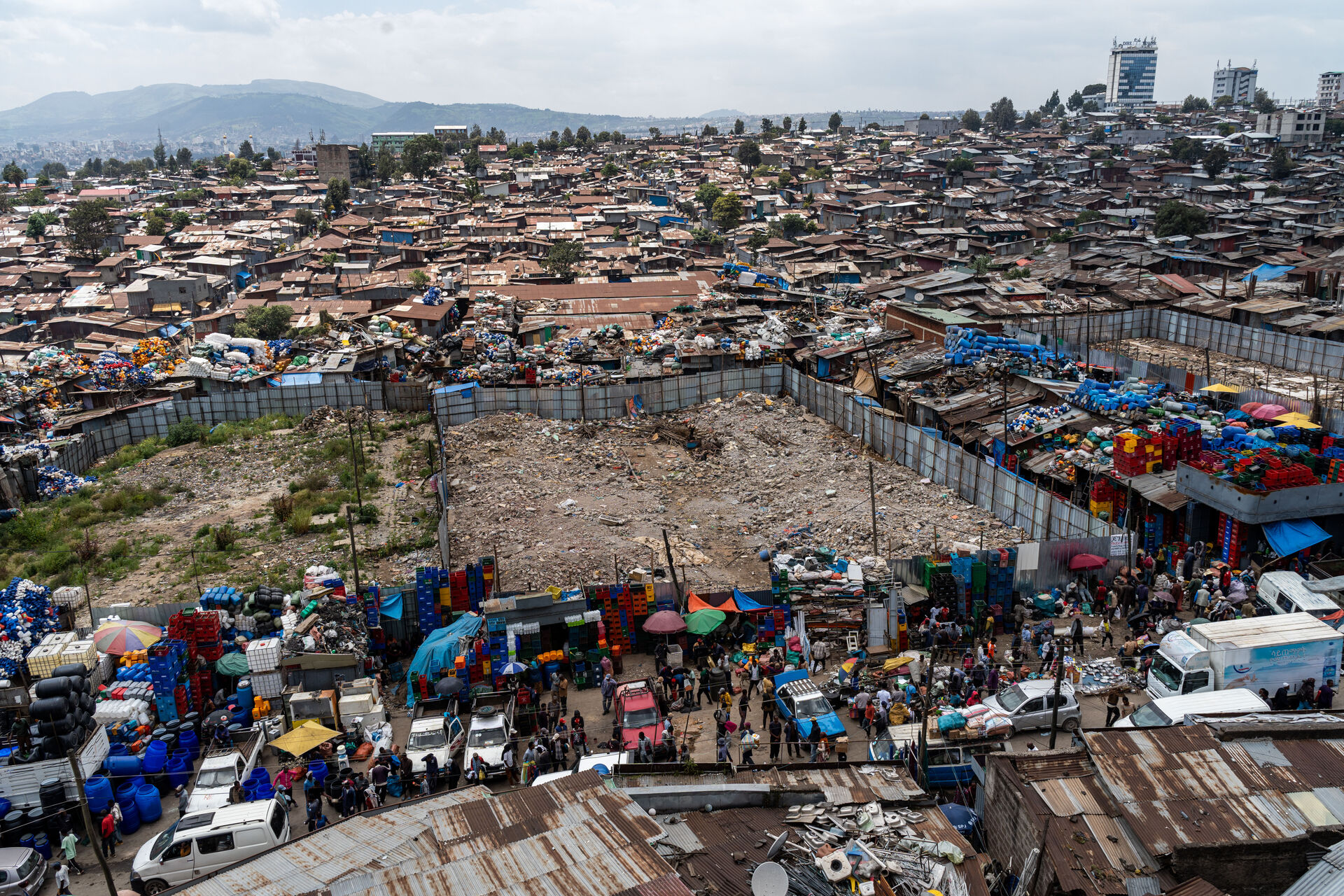 An aerial view of Addis Ababa, where households, formal and informal workplaces and markets form part of a complex urban environment. Photo credit: WHO/Aemero.
Lead prevention cannot sit with the health sector alone. The possible sources of exposure cut across workplaces, products, recycling, waste, housing and the environment. The strongest response therefore connects what health workers and laboratories are seeing with a need for action across relevant sectors that are linked to the different exposure sources, using evidence to drive safer practices, stronger standards, worker protection, environmental controls and public awareness.
Ethiopia is working to connect those pieces. A health worker who recognizes possible exposure, a laboratory that can confirm it, a public-health team that can investigate the source and authorities able to act on the evidence together create a far stronger line of defence than any one intervention on its own.
For children, that line of defence matters enormously. Lead exposure can affect a child’s ability to learn and reach their full potential, with consequences that may last a lifetime. Preventing exposure protects not only individual health, but also families, schools, communities and the country’s future.
Ethiopia's efforts are part of growing global momentum to prevent lead poisoning. Global action on lead poisoning is being strengthened through the new Bloomberg Philanthropies Lead Poisoning Prevention Initiative, which is supporting work to move countries from awareness to action. As part of the initiative, WHO is working with partners to strengthen clinical management in high-need countries, improve the capacity of poison centres to detect and manage cases, develop practical tools for capacity building and prevention, and equip health professionals and the public with clearer information on where lead risks come from and how to reduce them.
For Ethiopia, that means turning individual signs of exposure into a stronger system of prevention. Better testing can make an invisible risk visible. Clinical guidance can help health workers act sooner, while investigation can trace exposure back to its source. Ultimately, safer products, recycling and work practices can help prevent that source from harming the next person.